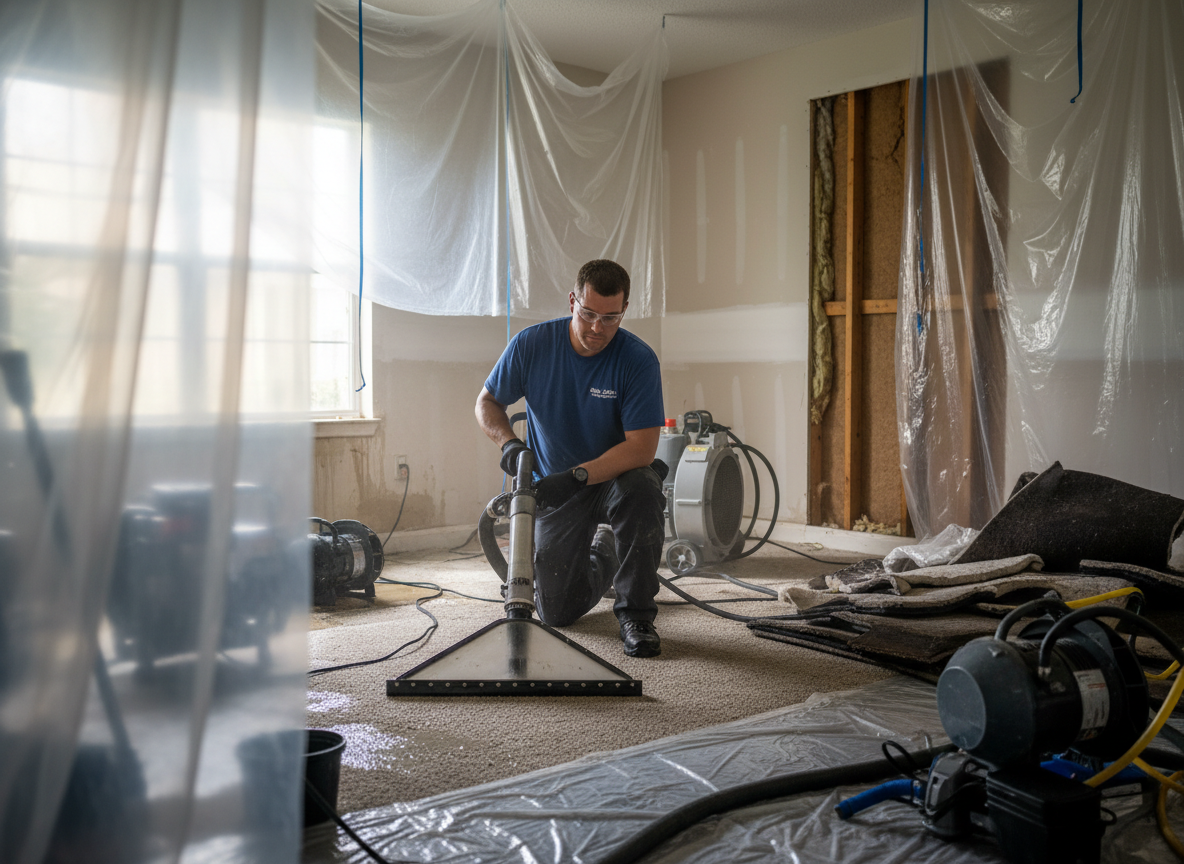
Plantation sits along the western edge of Dania with older single-family homes on slabs built before modern drainage codes. Tropical storms dump heavy rain that pools against foundations and creeps into crawl spaces along streets like NW 2nd Street and SW 3rd Avenue. Crews from 126 S Federal Hwy reach these blocks quickly via the highway and know which yards back up first when the canal system backs up.
Hot humid summers keep moisture trapped in drywall and under tile long after the rain stops, while warm winters allow year-round mold growth if extraction is delayed. Restoration teams focus on hidden pockets behind kitchen cabinets and in laundry rooms common to Plantation's 1950s-1970s stock. They pull baseboards early and set drying equipment on the concrete slabs that hold water longer than raised floors found farther west.
Access through narrow driveways and mature landscaping requires smaller extraction units and careful routing of hoses around oak roots. Nearby John U. Lloyd Beach State Park and the Dania Beach Historic District mark the eastern boundary, so crews watch for tidal surge influence that can push water west into Plantation streets during high-wind events.
Around Plantation
We regularly work near:
- 📍Dania Beach Historic District
- 📍John U. Lloyd Beach State Park
- 📍S Federal Hwy
- 📍Dania Beach Casino
Water Damage Restoration Dania in Plantation — Local Notes
- •Slab-on-grade homes from the 1960s line most Plantation blocks and trap water under tile when summer thunderstorms exceed 4 inches in an hour.
- •Mature trees and tight side setbacks limit equipment placement, so teams stage dehumidifiers on porches and run hoses along driveways to avoid root damage.
- •Proximity to the Intracoastal and John U. Lloyd Beach State Park means occasional tidal push that reaches western streets after nor'easters, requiring extra perimeter drying.
- •Dania Beach Historic District edges Plantation to the east, where older plumbing and roof lines leak during prolonged humid periods even without heavy rain.