Toilet overflows in Dania often hit older plumbing in the Dania Beach Historic District where cast iron lines from mid-century homes crack under repeated pressure. High water tables near John U. Lloyd Beach State Park push moisture upward through slab foundations, so water travels farther under tile and into subfloors than homeowners expect. In Broward County's tropical conditions, even a modest spill can reach wall cavities within hours during the hot, humid summers when indoor humidity stays above 70 percent.
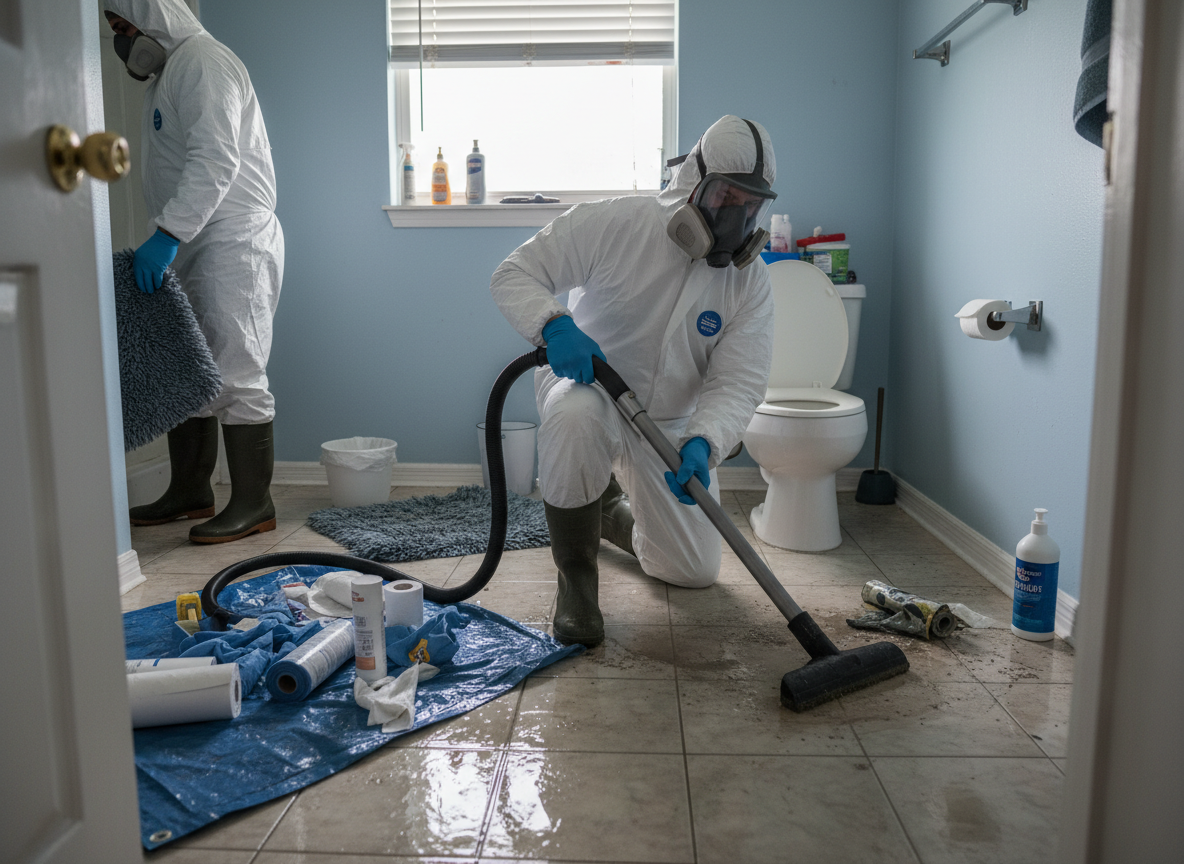
Extraction must begin immediately because warm winters rarely provide the dry air that helps natural evaporation. Technicians remove baseboards and drill weep holes in drywall to pull trapped water from behind fixtures common in Fort Lauderdale-adjacent neighborhoods. Carpet pad and particleboard vanities are usually discarded on site because they delaminate quickly; hardwood in Dania Beach homes requires separate moisture mapping to avoid cupping that shows up weeks later.
After water removal, industrial air movers and dehumidifiers run for several days while technicians monitor readings with pin meters. This step prevents the black mold growth that thrives in the area's consistent moisture. Homeowners along S Federal Hwy sometimes discover the overflow reached shared walls in duplexes, requiring coordination with neighbors before walls can be closed.
Technician insight
In Dania, the thing that catches most people out with toilet overflow cleanup is how the high water table near the beach and the older slab homes in the Historic District let water wick sideways under tile for days. The constant summer humidity keeps everything damp long after the spill looks gone, so you end up chasing moisture into walls that never fully dry without equipment.
Overflow in Dania Beach Duplex
Water from a second-floor toilet reached the downstairs unit through a shared wall in a Dania Beach duplex. Extraction stopped the spread into the lower unit's kitchen, but moisture had already entered the base of the shared wall. Equipment ran for four days until readings dropped, and both units stayed dry with no mold later.
How it works
- 1
Arrival and Containment
Technicians arrive 24/7 at the Dania address, shut off water if needed, and set up barriers to keep contaminated water from spreading to unaffected rooms.
- 2
Water Extraction
Standing water is removed with portable extractors, followed by removal of saturated carpet pad, baseboards, and any swollen flooring materials.
- 3
Drying and Monitoring
Air movers and dehumidifiers are placed, moisture levels tracked daily until drywall and subfloor reach acceptable readings for the local climate.
- 4
Sanitizing and Final Check
Affected surfaces receive antimicrobial treatment, then a final walkthrough confirms no hidden moisture remains before walls are closed.
Pricing
Pricing depends on affected square footage, how far water traveled under floors, and whether hardwood or tile must be removed.