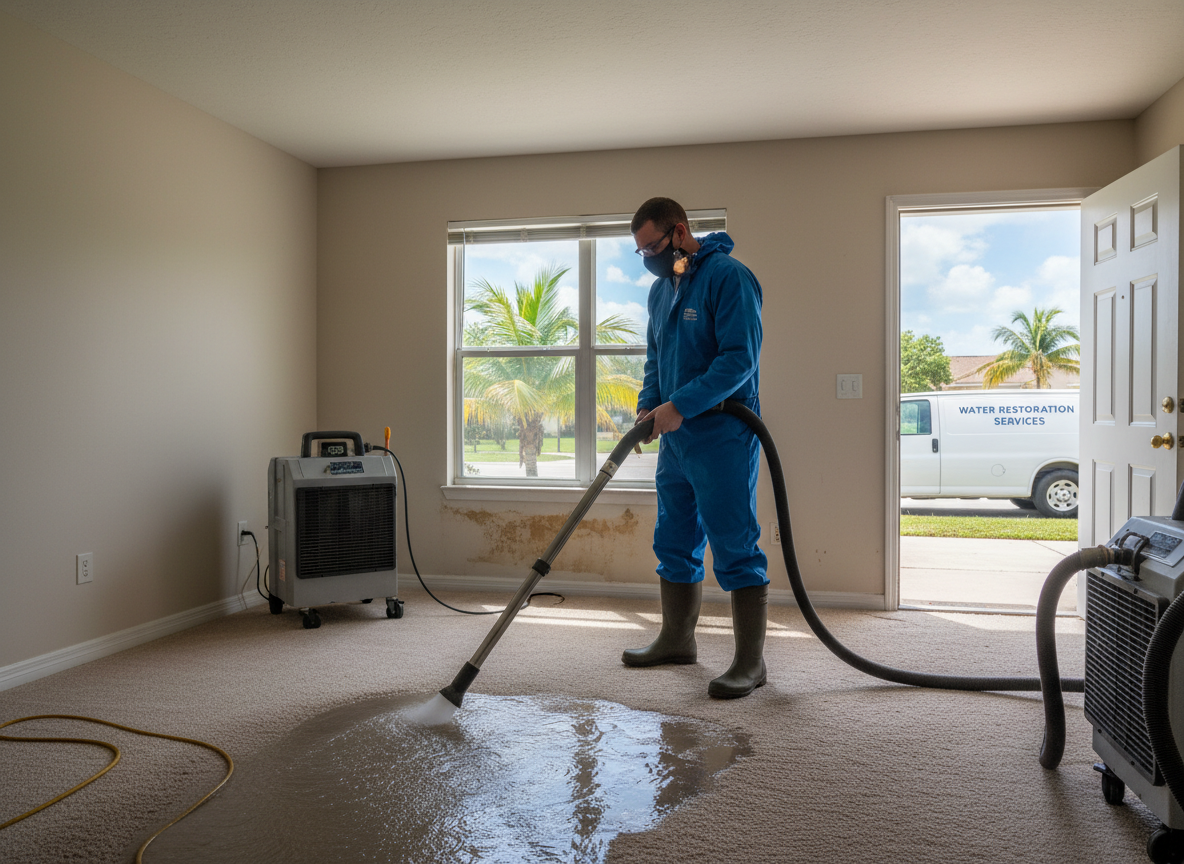
Dania sits in Broward County with a high water table and frequent tropical storms that push water into crawl spaces and slab foundations common in homes built before 1970 near the Dania Beach Historic District. Water cleanup services start with locating hidden moisture behind plaster walls and under terrazzo floors that retain humidity long after the visible water recedes. Crews use moisture meters calibrated for Florida conditions because warm winters keep relative humidity above 70 percent, slowing evaporation and raising mold risk in older wood framing.
Properties close to John U. Lloyd Beach State Park and the Dania Beach Casino often see salt-laden floodwater from storm surge that corrodes metal fasteners and leaves residue in HVAC ducts. Extraction equipment must handle both fresh and brackish water without spreading contaminants into neighboring units in multi-family buildings along S Federal Hwy. Drying plans account for the dense canopy around the historic district that blocks airflow, requiring additional air movers and dehumidifiers sized for the actual square footage rather than generic formulas.
Technicians document every step for insurance adjusters because Broward County building codes require permits for structural drying that affects load-bearing walls in pre-1950 homes. Skipping hidden moisture behind kitchen cabinets or in bathroom subfloors leads to recurring odors and warped baseboards that homeowners notice months later during the humid summer season.
Seasonal Drying Challenges
Tropical humidity in Dania extends drying times by days compared to inland areas. Technicians adjust equipment placement around live oak roots and limestone soil that holds water near John U. Lloyd Beach State Park.
Technician insight
In Dania the thing that catches most people out with water cleanup services is the limestone soil and high water table around the Dania Beach Historic District. Water from even a small leak travels under slabs and resurfaces days later inside older plaster walls because the ground never fully dries during our warm winters.
Crawl Space Flood After Heavy Rain
Water entered a 1960s home near John U. Lloyd Beach State Park through foundation vents during a summer storm. Inspection found saturated insulation and mold starting on joists. Crews extracted water, removed wet material, and ran drying equipment until readings matched dry standards before reinstalling access panels.
How it works
- 1
On-Site Assessment
Technician arrives within hours, maps water migration through slab and walls using meters, and notes affected materials in homes near Dania Beach Historic District.
- 2
Water Extraction
Industrial pumps and wands remove standing water from floors and carpets while protecting original terrazzo and wood features common in local properties.
- 3
Drying and Dehumidification
Air movers and commercial dehumidifiers run until moisture readings match unaffected areas, with daily monitoring to prevent mold in humid Broward summers.
- 4
Final Verification
Post-drying inspection confirms no residual moisture remains behind walls or under floors before handing the property back to the owner.
Pricing
Upfront quotes provided after inspection; final cost depends on water volume, affected square footage, and drying duration.