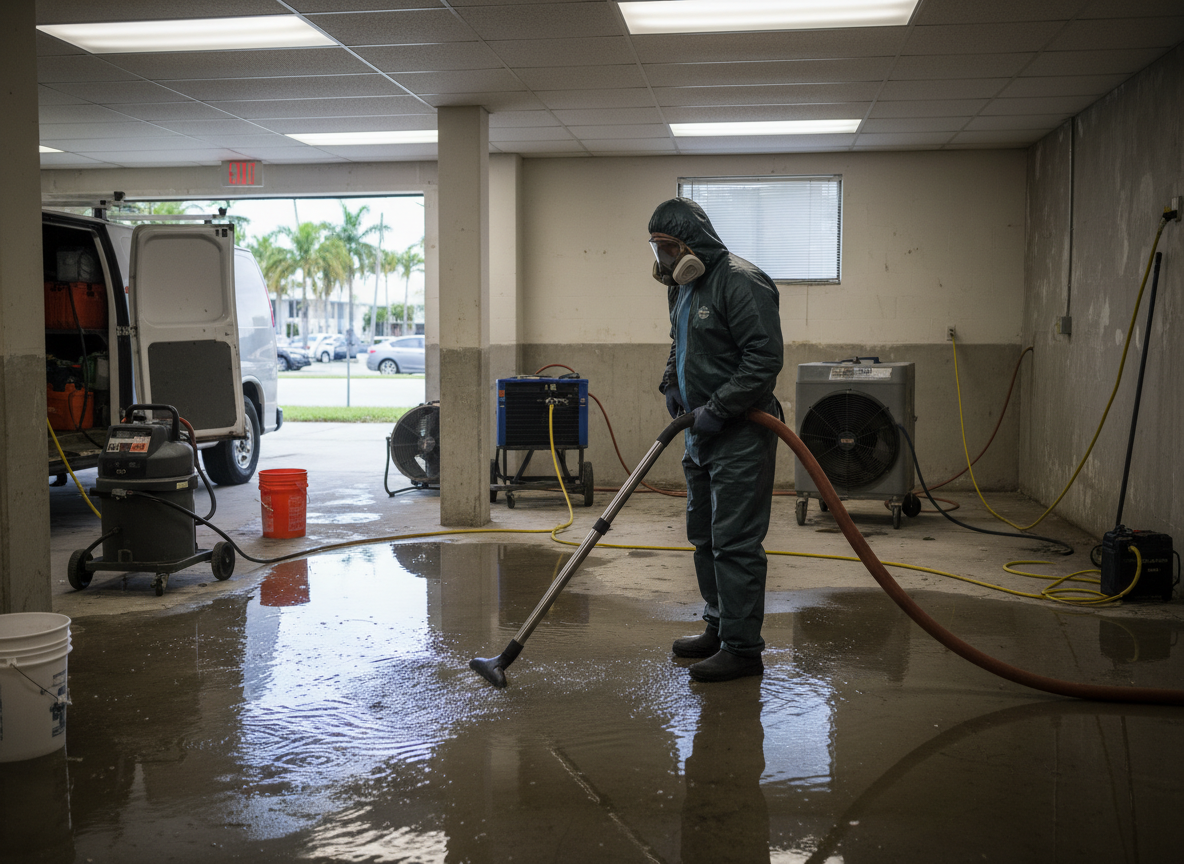
Dania sits in a low-lying coastal stretch of Broward County where summer thunderstorms and hurricane season push water into crawl spaces and slab homes built before modern elevation standards. Water extraction here often starts with removing standing water from older frame houses in the Dania Beach Historic District, where moisture quickly migrates into plaster walls and heart-pine floors. Technicians must account for the high water table near John U. Lloyd Beach State Park, which keeps soil saturated and slows natural drying even after pumps finish.
Equipment choices change with the season. In humid summer months, extraction alone leaves behind moisture that feeds mold on drywall and under vinyl in Fort Lauderdale-adjacent neighborhoods. Crews use subfloor drying mats and air movers rated for the salt-laden air that drifts in from the Intracoastal. Winter jobs near Dania Beach Casino properties are usually smaller but involve removing water that has wicked into stucco from wind-driven rain, requiring targeted baseboard removal rather than full-room demolition.
Edge cases appear regularly along South Federal Highway. Slab leaks in 1960s ranch homes can send water under ceramic tile installed directly on concrete, hiding until it reaches exterior walls. Extraction teams cut strategic weep holes and use moisture meters calibrated for South Florida concrete mixes before declaring a job dry. Failure to map these hidden pockets leads to callbacks when humidity spikes again.
Local code requires permits for any structural drying that involves wall or floor removal in historic zones. Homeowners along Dania Beach often discover that insurance adjusters want photo documentation of every extraction step because repeated tidal flooding has become common. Skipping this step delays claims and forces repeat visits when residual moisture reappears after the next warm front.
Technician insight
In Dania, the thing that catches most people out with water extraction is how fast moisture travels under 1960s slab homes once the water table rises after a summer storm. The salty air from the beach keeps everything from drying on its own, so you have to keep equipment running longer than you would in Hollywood or inland Fort Lauderdale. Homeowners in the historic district often skip checking behind baseboards until the smell shows up weeks later.
Crawl Space Flood After Heavy Rain
Water entered a 1970s frame house off Federal Highway after three days of rain pushed the water table up. Extraction revealed saturated insulation and mold starting on floor joists. Crews removed the standing water, set up targeted drying under the subfloor, and returned daily until readings dropped below local thresholds. The homeowner avoided full floor replacement.
How it works
- 1
Initial Assessment
Technician arrives within hours, maps water depth, and identifies affected materials in crawl spaces or slabs typical of Dania homes.
- 2
Water Removal
Pumps and extractors pull standing water while protecting nearby structures near the Intracoastal and John U. Lloyd Beach State Park.
- 3
Moisture Mapping
Meters check walls, floors, and subfloors to locate hidden pockets common in older Dania Beach Historic District properties.
- 4
Drying Setup
Air movers and dehumidifiers run until readings meet local humidity standards before equipment is removed.
Pricing
Upfront quotes after inspection; final cost depends on water volume, affected square footage, and drying time required by local humidity.